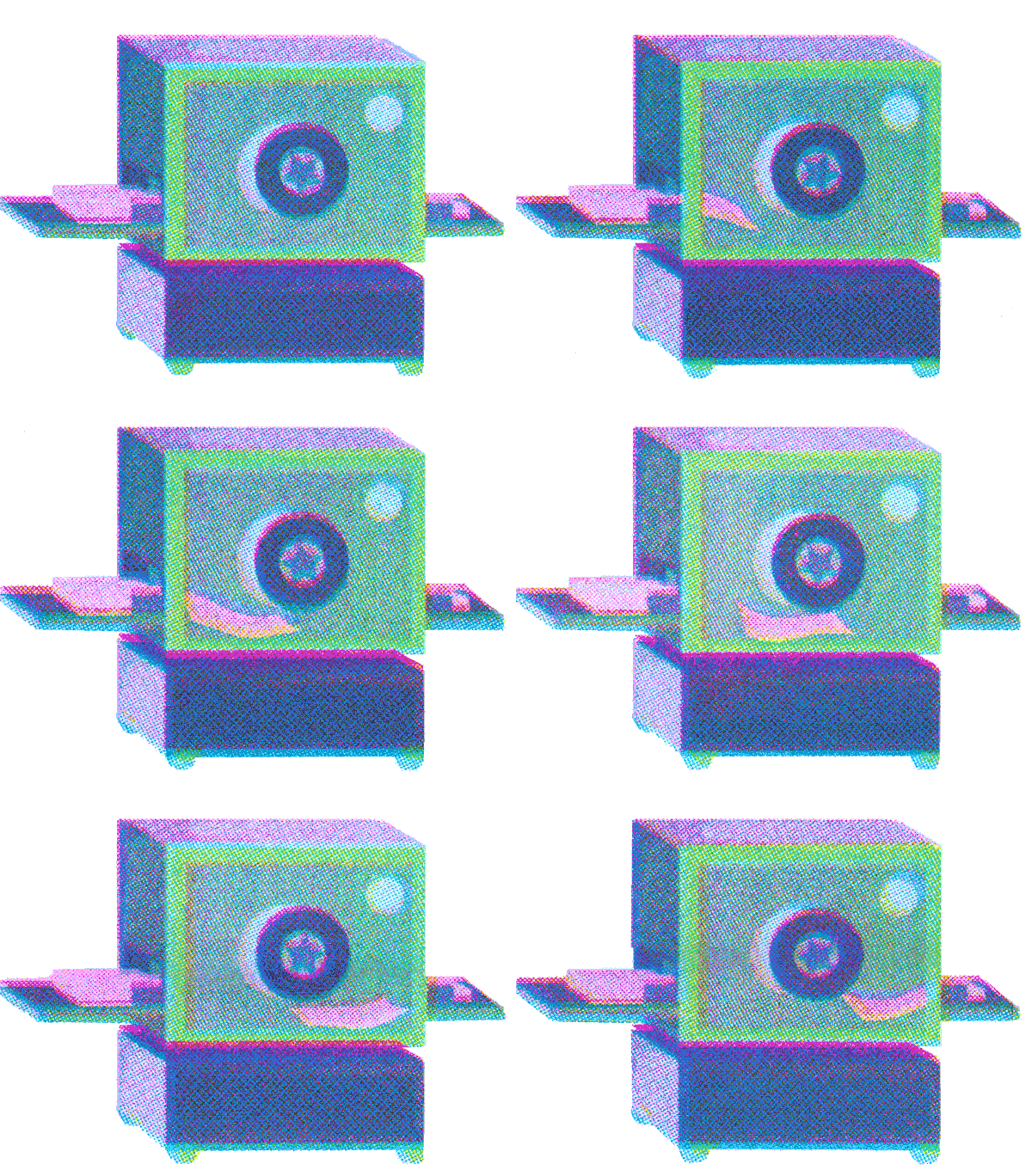
Originally deployed throughout Japan during the late 1980s as a rapid duplication apparatus for schools, administrations and low-level paper propagation sectors.
The Risograph was later adopted by artists, image-workers and recreational print operators due to its unstable chromatic behaviour, excessive pigment saturation and ceremonial misregistration tendencies ⍝
The unit operates through rotational stencil-transfer mechanics involving thermal master extraction, high-speed drum propulsion and soy-based ink deposition.
Image-information is burned into sensitive master membranes by concentrated heat abrasion, after which the cylindrical pigment core rotates at considerable velocity while paper substrates pass horizontally through the apparatus //
Resulting outputs frequently exhibit:
— retinal vibration
— accidental offset drift
— pigment turbulence
— mechanical overexposure
— euphoric layer collision
— low-level perceptual abrasion ⌇
Unlike offset systems, the RISO unit reaches full operational contamination almost immediately and is capable of prolonged high-volume output with minimal energetic expenditure and relatively low ecological residue ∴
Residual imperfections considered normal.